
Could You Build an ADU on Your Guelph Property?
Lots of people are talking about ADUs these days, and they're becoming an increasingly common topic of conversation with homebuyers.
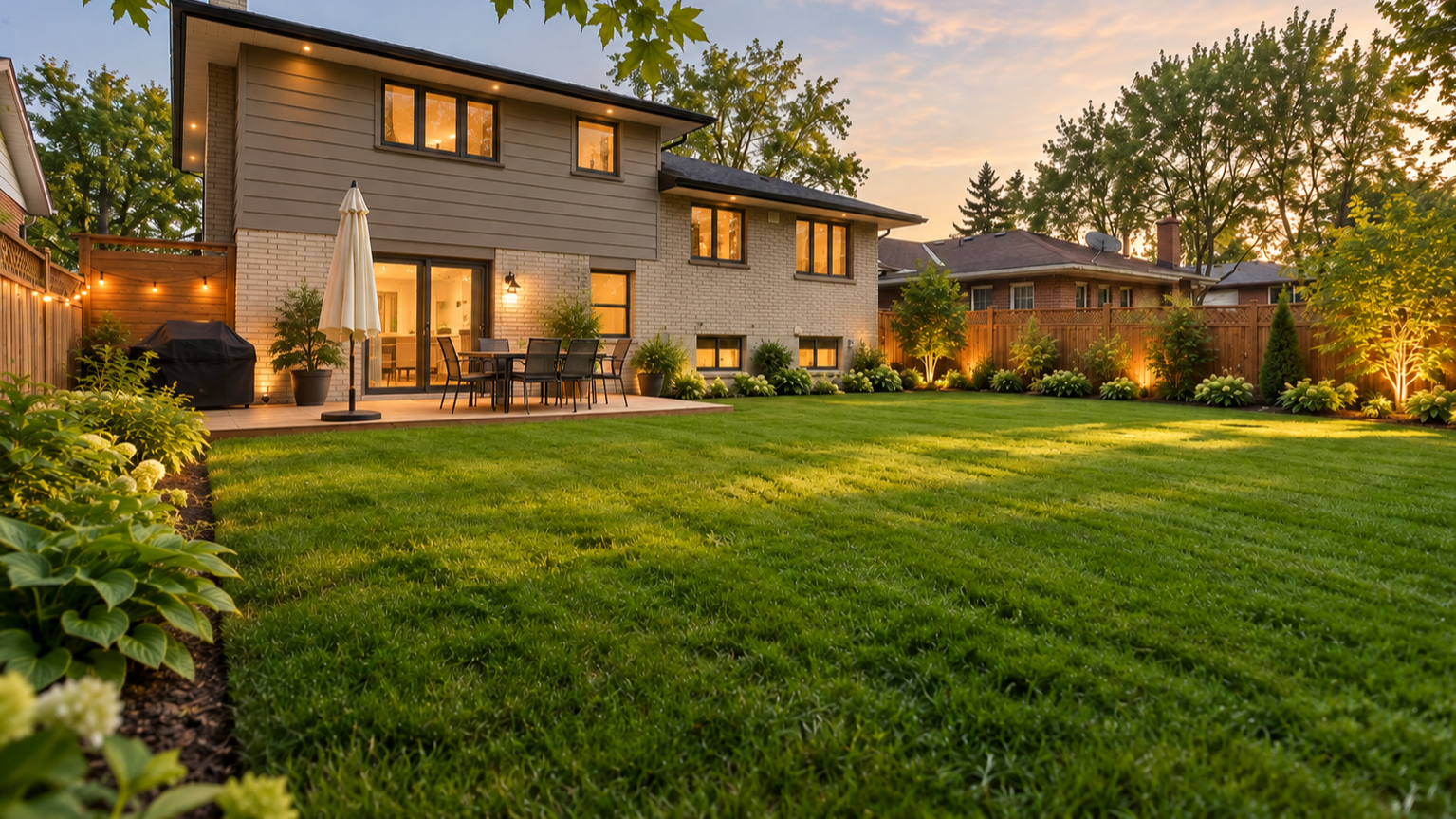
Most of my ADU conversations start in roughly the same way. We're looking out at a big backyard and talking about what it might accommodate. A swimming pool? A pavilion? A catio, even? (Gotta show the cats some love!)
Increasingly, though, I'm being asked a different question: Could this property accommodate an additional dwelling unit?
It's a fair question, and not a surprising one. Additional Dwelling Units (ADUs) have been getting a lot of attention in Guelph, and the way they're sometimes discussed can make them sound relatively simple. You've got the space, the City allows them, so what's stopping you?
Usually, it's the things nobody has looked at yet.
The backyard is the part you can see
You can get a reasonable sense of a backyard's size just by looking at it, and that's certainly one piece of the ADU puzzle. But other things are harder to judge. Where does the house sit on the lot? How would you access the backyard? What's already occupying that space? Are there mature trees? What about parking? And where do the water and sewer lines run? The list goes on.
The City of Guelph makes it clear that ADU feasibility doesn't hinge on any single factor. Zoning requirements and the capacity of water and wastewater servicing are both part of the picture, for example. And some of the things that can have the biggest impact on feasibility and cost are things you'd never see in a listing photo: servicing, grading, easements and utilities.
So when someone glances at a backyard and says with total confidence, "You could put an ADU here," I tend to get a little cautious. They might be right. But they're describing potential, and potential is a very different thing from confirmed feasibility. Some of the most expensive surprises can live in the gap between those two.
A better first question about ADU potential
It's tempting to start with the design: the layout, the finishes, the picture in your head of a parent or an adult kid living out back. I understand why. That part feels real and, frankly, it's fun.
But I've come to realize that the more useful first question isn't necessarily "Can I build an ADU?" It's "Is this property worth investigating further?"
That question is smaller and a lot less exciting. But it's definitely worth asking before you buy a home with a future ADU in mind, or start paying for architectural drawings.
Where a Realtor fits into the ADU conversation
An ADU project can eventually involve a whole cast of people: City staff, designers or architects, surveyors, engineers, contractors, lenders, appraisers and trades. That list can feel like a lot, but you don't necessarily need all of them involved on day one.
What can help early on is having someone who can look at the bigger picture and help you sort through the possibilities. That's where I think a Realtor can play a valuable role. I'm not an architect, planner or builder. What I bring is a real estate perspective.
How might an additional unit change the way a property is used? What could it mean for its value and eventual resale? And, perhaps most importantly, what is the homeowner actually trying to accomplish? Rental income? Housing for family? Aging in place? More flexibility down the road?
Once we understand the goal, we can start thinking about whether an ADU is the right approach or whether another option, such as an addition to the existing home or even a different property altogether, might make more sense. That last possibility, by the way, doesn't come up nearly as often as it should.
Buying a home with ADU potential in Guelph
For buyers, this is where ADUs get genuinely interesting. If an additional dwelling unit is something you'd like someday, that changes what makes a house a good purchase today.
A big yard will catch anyone's eye. But I'm also looking closely at the shape of the lot, where the house sits, side access, existing structures and the less glamorous details that can make a property more or less promising for an ADU. Two houses with similar yards can be very different propositions.
And I keep coming back to that word: promising. Buying a home because someone mentioned in passing that you could build a garden suite out back is a very different decision from buying one where that possibility has been thoughtfully investigated. The first is a hope. The second is the beginning of a plan. I'll be writing more about buying properties with ADU potential, because it's an area where I think buyers have a great deal to gain — and potentially a lot to lose if they make assumptions.
So, could you build an ADU on your property?
Maybe.
I know that's not the most satisfying answer. But until someone has looked closely at the property and the relevant requirements, it's probably the most responsible one.
The best place to start isn't necessarily with floor plans or a picture of the perfect backyard garden suite. It's with the property itself, and a clear understanding of what you're hoping an additional dwelling unit will make possible. Sometimes that leads to a garden suite. Sometimes it leads to a basement apartment, an addition, or something else entirely.
And sometimes the best decision is not to build an ADU at all.
