
Could ADUs Help With Ontario's Housing Crisis?
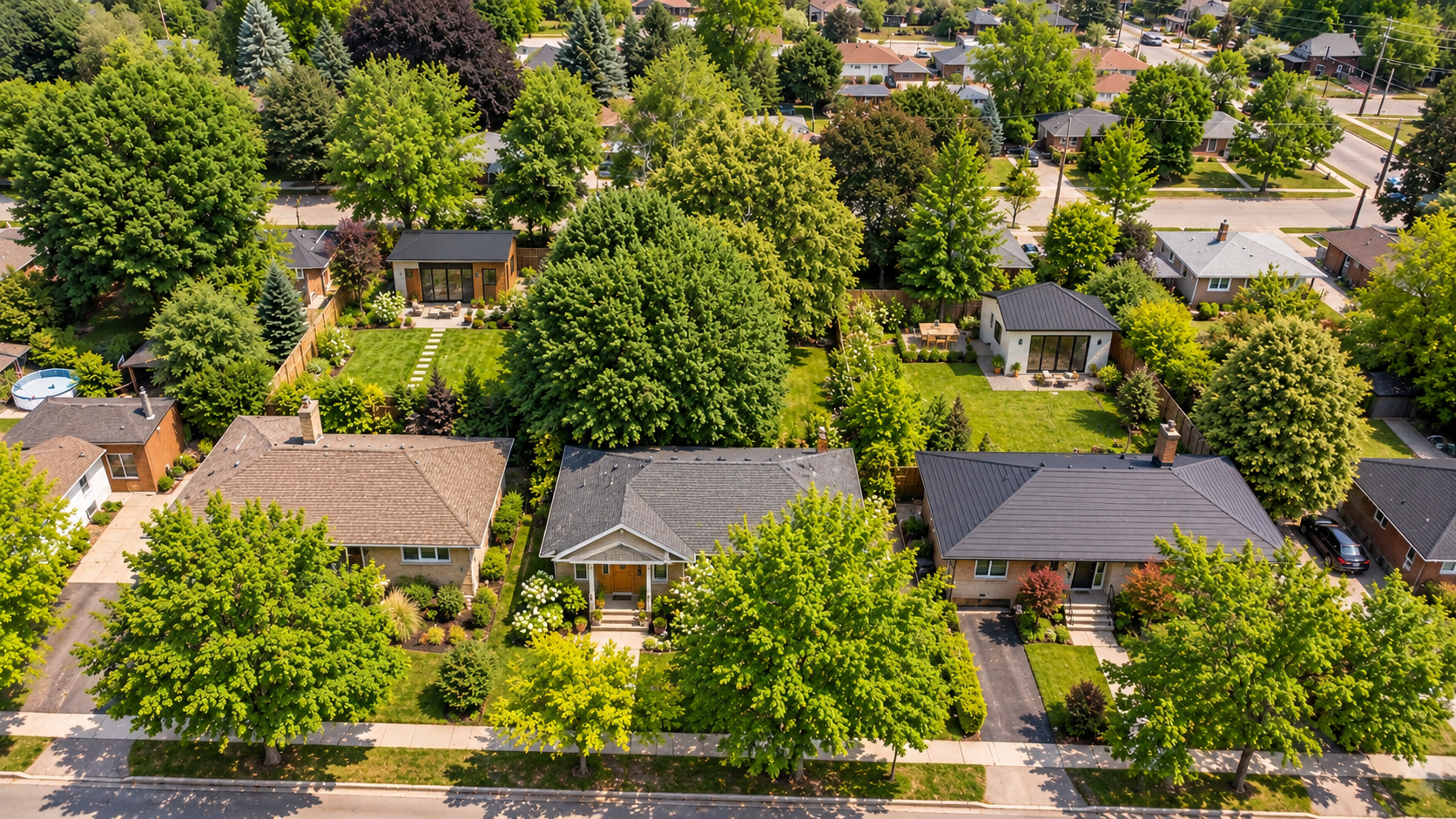
Ontario's housing problem is almost impossible to discuss without reaching for very big numbers. We need more homes, and much of the conversation centres on big solutions: new subdivisions, apartment buildings and major changes to planning policy.
Those things matter. But there's another housing opportunity sitting in plain sight: our backyards, basements, garages and the neighbourhoods we've already built.
Additional dwelling units (ADUs) won't solve Ontario's housing crisis. They may, however, help us add homes gradually, in places where people already live. And I realize that one homeowner adding a single unit doesn't sound transformative. On its own, it isn't. What makes ADUs interesting is what happens when that small decision repeats across hundreds — or potentially thousands — of properties.
Guelph as an example
The City of Guelph's 2024 housing figures illustrate why this matters. According to the figures cited in the City's housing update, 629 new dwelling units were permitted in 2024, including 325 ADUs. That tells us that ADUs accounted for more than half of the new units permitted that year — a striking contribution in a year when larger-scale residential construction slowed considerably. New subdivisions? No — these were homes being added, one property at a time, to neighbourhoods that already existed.
Of course, this isn’t going to solve the housing crisis. But it's not insignificant, either. And it’s important not to fall into the trap of so many political pundits and limit the housing crisis conversation to extremes. So often, politicians limit their talking points — and frankly their imaginations — to two scenarios: the detached house and the apartment in a tower. I can tell you that many people don’t want — or need — either of those housing scenarios.
A small backyard home or secondary suite might suit a single person, older adult, young couple, student or adult child who is working but nowhere near ready to buy. And ADUs can also give people more options as their circumstances change, without necessarily forcing them to leave neighbourhoods where they've built their lives.
Planners call this gentle density. The term is accurate, but the idea is simpler than the jargon suggests. Many established Guelph neighbourhoods were built when households tended to be larger. An ADU can let a street welcome a few more neighbours without a tower going up on the corner. It's a way for a neighbourhood to make room gradually while retaining much of what makes it familiar.
That gradual quality is part of the appeal. It's also part of the limitation.
The reality of ADUs
I see more and more real estate listings advertising “plenty of room for an ADU.” Frankly, I think that can be misleading and it’s important to be clear about how difficult these projects can be.
ADUs can be expensive to build — typically well into six figures — and financing can be tricky. My hunch is that the average Guelph homeowner would be surprised by the work and costs involved, as well as by how long it might take for rental income to recover the investment. Servicing also matters, and the costs of water and wastewater infrastructure work can be substantial, including, in some cases, work that extends beyond the property line. Sometimes the thing you can't even see can become one of the biggest expenses in a project like this.
Costs aside, a big backyard is only a starting point. Not every property can accommodate an ADU and plenty of properties with massive backyards could be ruled out as suitable for an ADU for any number of reasons.
There's another distinction that often gets lost as politicians pat their backs during policy announcements: Giving homeowners permission to build an ADU doesn't mean they will build one. Changing the rules creates possibility. Turning that possibility into actual housing is the hard part.
What would need to happen?
For ADUs to make a meaningful contribution to the housing shortage, several things need to line up:
Homeowners need to understand what's possible — and what isn't.
Financing has to make sense.
The approval process has to be navigable for someone who isn't a developer.
Designers and builders need approaches that work at this smaller scale.
Buyers need to recognize which properties might support an additional unit.
No single profession or organization can make all of that happen. There are a lot of moving pieces, and the process can feel overwhelming.
Looking at what we've already built
As a Realtor, I spend my days looking at existing housing stock. I walk through Guelph properties every week, and increasingly I'm looking at them not just for what they are today, but for what they might become. A deep lot. A corner property. An oversized garage. A house set unusually far forward on its lot. None creates housing on its own. Collectively, though, properties like these may represent capacity that hasn't traditionally been part of the real estate conversation.
Part of addressing Ontario's housing shortage is deciding where we build next. But another part should be looking thoughtfully at what we've already built — and finding practical ways to make gentle density possible.
